Let’s Get Briefed

“Considering our nation’s merciless criminal justice policies, it comes as no surprise that the United States has the largest prison population and highest incarceration rate in the world.”  (9)

The US Penal Institution is flawed in many ways, especially when compared to the rest of the world. Human injustices of all kinds can be found in almost every prison across America. I’m going to focus on one issue: the gross misuse of solitary confinement as punishment.

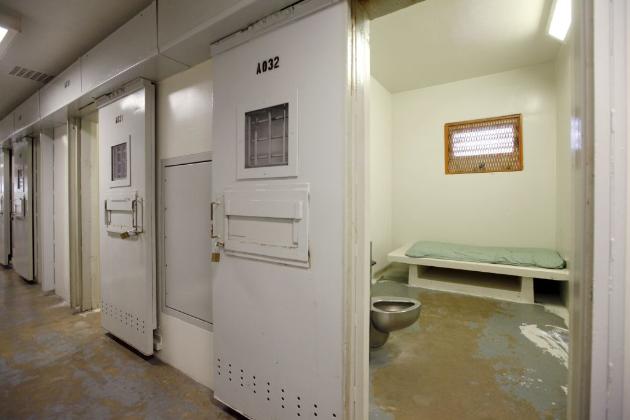
“The USA stands virtually alone in the world when it comes to incarcerating thousands of prisoners in long term or indefinite solitary confinement. Under the US system, inmates are held in small cells in harsh physical conditions and with minimal human interaction for years, sometimes decades. The mental health of many prisoners suffers greatly as a result and for some, the pressure leads them to take their own lives.” (1) Using isolation is a common practice within 40 states and 80,000 people are held in isolation at any given time. These cells usually measure to less than 80 square feet (smaller than a typical horse stable) and only contain a concrete bed, a desk, and a sink/toilet (note that I didn’t say a window). Prisoners are confined to their cells for typically more than 22 hours a day without access to work or rehabilitation programs. An hour of  ‘exercise’ time can be expected during your day, but it may be spent within a small cage with no view of the outside. 

“For most of the 20th century, a typical stay in solitary amounted to just a few days, or several weeks in more extreme cases. Today, it’s not unusual for inmates to spend years at a time in solitary. Supporters say the practice helps keep prisons safe, but according to the medical literature, solitary confinement can also take a heavy mental toll.” (10)

Conditions in isolation units, combined with the lack of rehabilitation programmes, can exacerbate existing mental health conditions and create new ones, such as anxiety, depression and paranoia. Many prisoners also suffer from extreme weight loss and sight problems caused by the conditions of detention.” (1) 

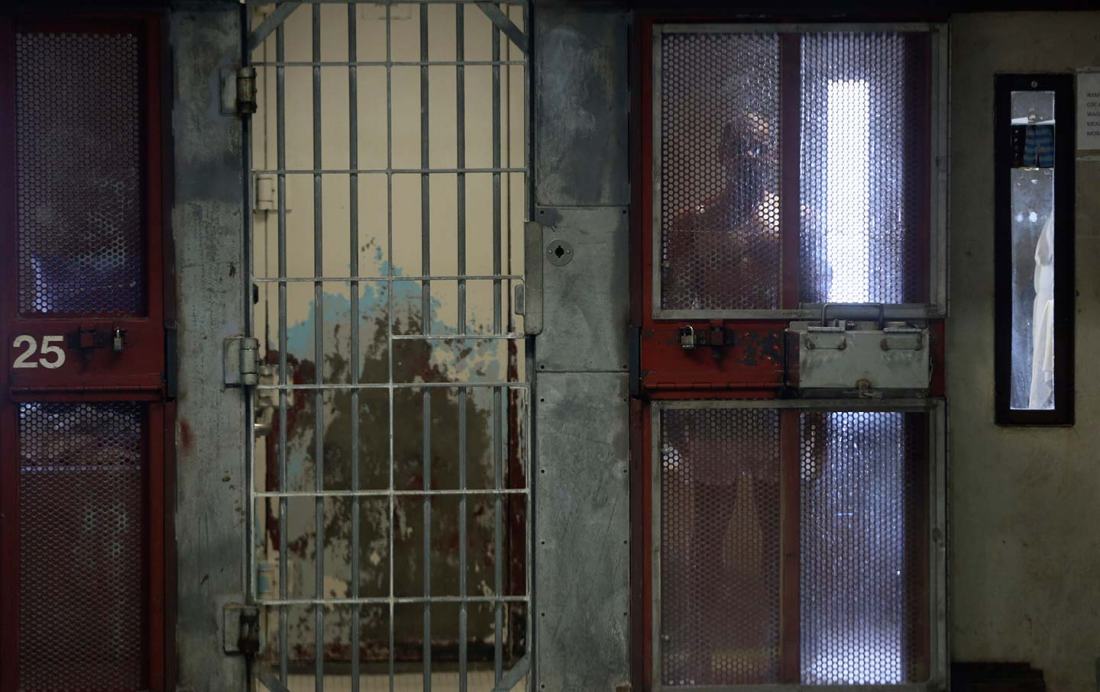
In some of the most extreme cases, like that of Albert Woodfox (of the Angola 3), one can wrongfully spend 44 years in solitary confinement. (4) The story of solitary confinement gets even worse when one looks at what happens once the prisoners are released. Amnesty says that “many prisoners are released straight from isolation to the community with no transition programme. In Arizona, for example, just before being released, they are simply provided with an ID and $50.” (1) An article from PBS Frontline talks on the ability of prisoners to adjust back into a larger society after being confined to isolation for extended periods, psychologist Craig Haney found that prisoners “lose the ability to initiate or to control their own behavior, or to organize their own lives.” He also found that often times prisoners in solitary “begin to lose the ability to initiate behavior of any kind — to organize their own lives around activity and purpose.” What results is chronic apathy, lethargy, depression and despair. “In extreme cases, prisoners may literally stop behaving.” (10)

In 2011 Juan Mendez, the United Nations Special Rapporteur on torture and other cruel, inhuman or degrading treatment, called on all countries to ban the solitary confinement of prisoners except in very exceptional circumstances and for as short a time as possible, with an absolute prohibition in the case of juveniles and people with mental disabilities.” (2) 

With all of this, one can conclude that America has outright ignored human rights under the thin vale of penal institutions.
 

How does this impede sustainable development?

The United Nation has 17 Sustainable Development Goals including (3) Good Health and Well-Being and (8) Decent Work and Economic Growth. The US prison system and its gross use of solitary confinement, directly impedes these goals for the prisoners within them.

(3) Good Health and Well-Being; decades of solitary confinement in no way promotes good health and the well-being of people within them. “Stuart Grassian, a board-certified psychiatrist and a former faculty member at Harvard Medical School, has interviewed hundreds of prisoners in solitary confinement. In one study, he found that roughly a third of solitary inmates were “actively psychotic and/or acutely suicidal.” Grassian has since concluded that solitary can cause a specific psychiatric syndrome, characterized by hallucinations; panic attacks; overt paranoia; diminished impulse control; hypersensitivity to external stimuli; and difficulties with thinking, concentration and memory. Some inmates lose the ability to maintain a state of alertness, while others develop crippling obsessions.” (10)

(8) Decent Work and Economic Growth; “The average of the minimum daily wages paid to incarcerated workers for non-industry prison jobs is now 86 cents, down from 93 cents reported in 2001. The average maximum daily wage for the same prison jobs has declined more significantly, from $4.73 in 2001 to $3.45 today.” (12) With the average pay incarcerated workers get being overwhelmingly low to begin with, how is one who is placed in solitary confinement for years to decades able to create any sort of economic growth or have any decent work?

All in all, the US has been extremely violating human rights under the veil of incarceration. We, as a people, need to massively critique our current penal institution and system.

Bibliography

(1) “Ten Things You Should Know about the USA’s Brutal Isolation Chambers.” Early Amnesty.org, http://www.amnesty.org/en/latest/news/2014/10/ten-things-you-should-know-about-usa-s-brutal-isolation-chambers/.

(2) “USA: Prisoners Held in Extreme Solitary Confinement in Breach of International Law.” Amnesty.org, http://www.amnesty.org/en/latest/news/2014/07/usa-prisoners-held-extreme-solitary-confinement-breach-international-law/.

(3) “California Must Introduce Radical Changes to Prison Isolation.” Amnesty.org, http://www.amnesty.org/en/latest/news/2014/02/california-solitary-confinement-hearing/.

(5) “Caged for the Storm as Hurricane Florence Bears Down.” Human Rights Watch, 14 Sept. 2018, http://www.hrw.org/news/2018/09/12/caged-storm-hurricane-florence-bears-down.

(8) Diamond, Dan, et al. “Exclusive: Trump Finalizing Opioid Plan That Includes Death Penalty for Dealers.” POLITICO, POLITICO, 15 Mar. 2018, http://www.politico.com/story/2018/03/15/exclusive-trump-finalizing-opioid-plan-death-penalty-418488.

(9) Bandele, Monifa. “Here’s How Prison and Jail Systems Brutalize Women, Especially Mothers.” American Civil Liberties Union, Aclu, 25 Oct. 2017, http://www.aclu.org/blog/womens-rights/women-and-criminal-justice/heres-how-prison-and-jail-systems-brutalize-women.

(10) “What Does Solitary Confinement Do To Your Mind?” PBS, Public Broadcasting Service, http://www.pbs.org/wgbh/frontline/article/what-does-solitary-confinement-do-to-your-mind/.

(11) “Shifting Away from Solitary.” The Marshall Project, 16 Nov. 2016, http://www.themarshallproject.org/2014/12/23/shifting-away-from-solitary.

(12) Sawyer, Wendy. “How Much Do Incarcerated People Earn in Each State?” States of Incarceration: The Global Context 2016 | Prison Policy Initiative, http://www.prisonpolicy.org/blog/2017/04/10/wages/.

IMAGES

(1) “Solitary Confinement: An Exemplum of Cruel & Unusual Punishment.” ReligiousLeftLaw.com, http://www.religiousleftlaw.com/2013/10/solitary-confinement-an-exemplum-of-cruel-unusual-punishment.html.

(2) “Solitary Confinement.” Reveal, Reveal, http://www.revealnews.org/topic/solitary-confinement/.